


AI hasn't replaced engineers. It has changed the math of what a software team needs to look like. A view on where this is going, and what it means for the next five years of how software gets built.
A few years ago, building a piece of business software meant putting together a project. A handful of engineers, a project manager, a business engineer, a designer, a tester, a product owner. By the time everyone was in the room for the daily standup, the meeting itself cost more than what some companies used to spend on a full week of development.
The picture is changing, and the pace is picking up. It may not have been dramatically visible until now, but it is becoming harder to ignore, especially for anyone running a software project today. As Bloomberg also points out, the shift is becoming more and more visible.
The team is getting smaller.
It is easy to say AI changed everything. The honest version is more specific.
AI accelerated the most execution-heavy part of software development - writing code - to a point where it no longer defines how long a project takes. What was already affordable has become almost free. What it didn't change is the expensive part: deciding what to build, understanding the business it is being built for, and making all of the small judgement calls that turn a working feature into a useful one.
Five years ago, a team of ten to twelve people was needed for most projects because most of those twelve were translating. Translating product ideas into User Experience and Design. User Experience into specifications. Specifications into architecture. Architecture into code. Code into tests. Tests into release notes. Each layer added value, but each one also added a person whose job was mostly to carry context to the next person.
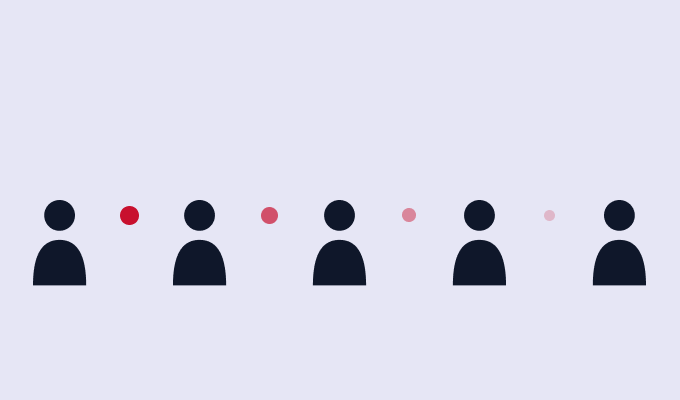
Once code became almost free to produce, several of those translation layers stopped paying for themselves. A senior engineer with the right context and the right tools can now do what used to take three or four people doing handoffs.
Most companies didn't fall behind on AI because the tools were wrong. They fell behind because nobody changed how the team was shaped. AI made the typing cheap, and that made the knowing more valuable than ever.
This is the part that gets missed in most conversations about AI in software today.
The companies pulling ahead aren't the ones with the biggest AI tool budgets. They are the ones that rebuilt their teams around the new math. Smaller groups, fewer handoffs, more time spent with the actual business, and less time spent writing tickets for someone else to pick up.
It is also why some teams that bought a lot of AI tools last year are not seeing the gains they expected. The tools alone don't change much if the team is still structured around the old assumption that writing code is the bottleneck.
Three has been emerging as a common shape.
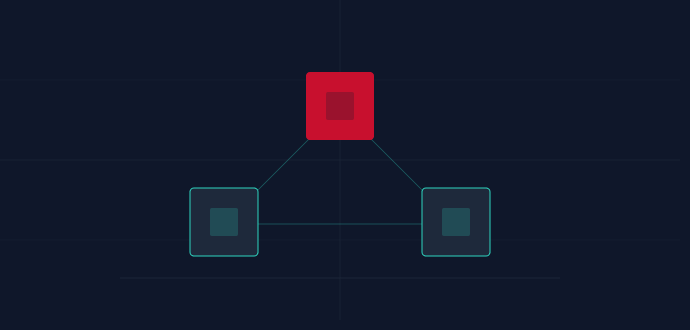
One person who knows the business deeply - the industry, the regulations, the way the customer actually talks - we call it a Domain Expert. Two engineers who work AI-native, meaning they spend most of their time on architecture, integration, and judgement, not on producing code from scratch.
This is the shape we built Vantikai around. We call it a Pod. Three people, working directly with the business they serve. The Domain Expert carries the brief and fosters ideation with the client - no separate translation layer needed. The engineers own what they ship, end to end. The coordination that used to live across five calendar invites happens inside one team. There are always two of them to ensure we have a backup whenever someone is on leave - not for the throughput.
A Pod looks small from the outside. The outcome rarely is.
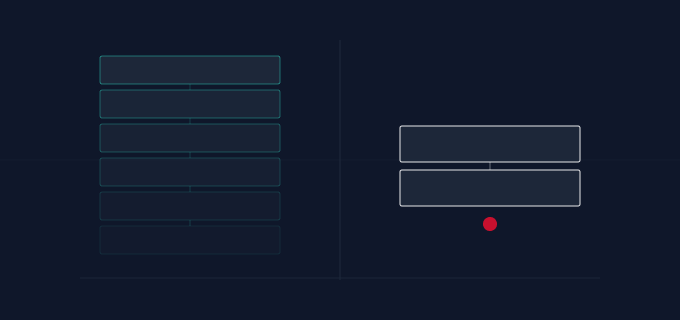
Two things will probably become more visible over the next few years.
The first is that the team size needed to deliver any given piece of software will keep getting smaller. The direction is already clear, and the tools are improving faster than most companies can restructure to take advantage of them. What takes three people in 2026 will likely take two by the end of the decade.
The second is more interesting. Software is moving from being a department inside the company to being a property of the company itself.
In the old model, the business hired or contracted IT, and IT built software for the business. There were two teams, two budgets, two ways of thinking, and a permanent translation layer between them. In the new model, software is built inside the operation, by people who already understand the operation, with AI doing the parts that used to need a separate function.
The implications go beyond cost. A business that used to need a six-month integration project to change its order process can now adjust the same process in a week. A company that used to outsource its customer onboarding to a generic SaaS platform can now build an onboarding flow that fits how it actually sells. The cost of making software bend to the business, rather than the business bending to the software, has dropped to something most SMEs can afford for the first time.
For the Swiss scale-ups and SMEs we sit across from, the question is no longer whether to adopt AI. That conversation is settled. The harder question is how to organize the company so that AI actually compounds, rather than sitting unused inside a tool subscription.
Smaller teams with deeper context. Engineers who own outcomes rather than tickets. Domain knowledge next to the engineering, not across a handoff. These are organizational choices. They have very little to do with which AI tool gets purchased next quarter.
The companies that will look most different in five years are not the ones with the biggest AI budgets. They are the ones that quietly rebuilt how their teams are shaped.
That shift is already underway. The team is getting smaller, the output is getting larger, and the gap between those two numbers is where the next decade of software is going to be built.